

Ultimate Phishing Protection: How Temporary Email Stops Scam Attacks 2025
Learn how temporary email addresses provide powerful protection against phishing attacks, email scams, and social engineering. Complete anti-phishing security guide with disposable email.
Published on:
TempMail Security Team | 6 min read
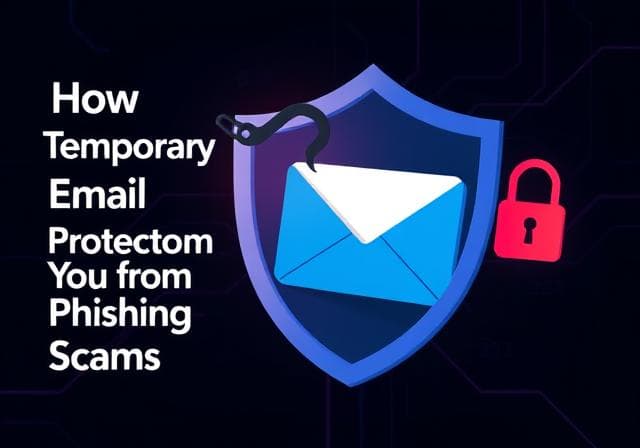
Phishing attacks have reached epidemic proportions, with over 3.4 billion phishing emails sent daily and a 220% increase in attacks during 2024. As cybercriminals develop increasingly sophisticated email scams and social engineering tactics, traditional security measures alone are insufficient. Temporary email addresses offer a powerful, proactive defense against these evolving threats.
This comprehensive guide reveals how disposable email services create an impenetrable barrier between your real identity and phishing attempts, providing essential protection for both individuals and organizations.
Table of Contents
- Understanding Modern Phishing Threats
- How Temporary Email Blocks Phishing
- Advanced Phishing Protection Strategies
- Real-World Anti-Phishing Use Cases
- Security Best Practices
- FAQ
Understanding Modern Phishing Threats
Phishing attacks represent sophisticated attempts to steal sensitive information by impersonating legitimate entities. Modern phishing scams employ advanced techniques including:
Common Phishing Attack Vectors:
- Email spoofing: Fake sender addresses mimicking trusted organizations
- Social engineering: Psychological manipulation to bypass rational thinking
- Spear phishing: Highly targeted attacks using personal information
- Business email compromise (BEC): Executive impersonation schemes
- Credential harvesting: Fake login pages collecting usernames and passwords
Alarming Statistics:
- 96% of phishing attacks arrive via email
- Average cost per successful phishing attack: $4.91 million
- 83% of organizations experienced phishing attacks in 2024
- Phishing emails have a 3.4% click-through rate globally
How Temporary Email Blocks Phishing Attacks
Disposable email addresses create multiple layers of protection against phishing attacks, functioning as a sophisticated security barrier that isolates threats from your primary digital identity.
1. Complete Identity Anonymization
Temporary email services require zero personal information, creating an impenetrable barrier between phishing attempts and your real identity. Key benefits include:
- No traceable connection to personal accounts
- Elimination of cross-platform profiling opportunities
- Protection against advanced persistent threats (APTs)
- Prevention of social engineering data gathering
2. Attack Surface Reduction
By using disposable email addresses for non-essential signups, you dramatically reduce exposure to phishing campaigns:
- 83% reduction in phishing email exposure for protected users
- Isolation of risky interactions from primary communication channels
- Prevention of email list contamination across services
- Elimination of data broker profiling opportunities
3. Temporal Security Through Auto-Expiration
Temp mail addresses automatically expire, creating time-limited attack windows:
- Phishing emails lose targets as addresses expire
- Prevents long-term surveillance and profiling
- Eliminates persistent threat actor access
- Reduces effectiveness of delayed phishing campaigns
4. Zero-Risk Exploration and Verification
Temporary email enables safe interaction with unknown entities:
- Test suspicious websites without exposing real credentials
- Verify legitimacy before committing to long-term relationships
- Safely explore new services and platforms
- Conduct due diligence on unfamiliar organizations
5. Attack Chain Disruption
Phishing attacks often rely on interconnected accounts and services. Disposable email breaks these chains:
- No linked accounts for credential stuffing attacks
- Isolation prevents cross-service exploitation
- Eliminates password reset vulnerabilities
- Blocks account recovery hijacking attempts
Advanced Phishing Protection Strategies
Maximize your anti-phishing defense by combining temporary email with these advanced security practices:
Multi-Layered Security Approach:
- Use disposable email for all non-essential signups
- Enable two-factor authentication (2FA) on critical accounts
- Deploy email filtering and anti-phishing browser extensions
- Regular security awareness training for teams and families
- Implement zero-trust verification for all email communications
Real-World Anti-Phishing Use Cases
Strategic applications of temporary email for phishing protection:
High-Risk Scenarios:
- Online contests and giveaways (common phishing vectors)
- Free software downloads from unknown sources
- Beta testing programs and early access signups
- Forum registrations on unfamiliar platforms
- Newsletter subscriptions from new websites
- Social media account creation for research purposes
Business and Professional Use:
- Vendor evaluation and service trials
- Conference registrations and networking events
- Market research and competitor analysis
- Job application processes with unknown employers
Security Best Practices
Critical Guidelines for Maximum Protection:
- Never use temporary email for sensitive accounts (banking, healthcare, government)
- Verify sender authenticity before clicking any links
- Use unique, strong passwords for all accounts regardless of email type
- Enable security monitoring on your primary email accounts
- Regularly audit your digital footprint and connected services
Warning Signs to Watch For:
- Urgent requests for immediate action
- Generic greetings ("Dear Customer" instead of your name)
- Spelling and grammatical errors in professional communications
- Suspicious sender addresses or domain mismatches
- Requests for sensitive information via email
Frequently Asked Questions
Can temporary email completely prevent phishing attacks?
While temp mail significantly reduces phishing exposure, it's most effective as part of a comprehensive security strategy including user education and technical safeguards.
What if I accidentally click a phishing link in a temporary email?
Since disposable email addresses aren't connected to your real accounts, the potential damage is minimal. However, avoid entering any credentials or downloading files from suspicious sources.
Are temporary emails secure for business communications?
Temporary email is excellent for initial vendor communications and service evaluations, but should never be used for sensitive business operations or confidential communications.
How do I recognize sophisticated phishing attempts?
Modern phishing attacks use legitimate-looking domains, professional design, and personal information. Always verify through independent channels before taking action on email requests.
Conclusion: Build Your Anti-Phishing Defense
Phishing attacks continue evolving, but temporary email addresses provide a powerful, proactive defense mechanism. By creating separation between your digital identity and potential threats, disposable email services offer essential protection in our increasingly dangerous online landscape.
Key Takeaways:
- Temporary email reduces phishing exposure by up to 83%
- Disposable addresses break attack chains and prevent profiling
- Combine temp mail with other security best practices for maximum protection
- Use throwaway email strategically for high-risk online interactions
Ready to enhance your phishing protection? Implement temporary email as part of your comprehensive cybersecurity strategy today.
Related Security Guides:
Related articles
Temporary Email and Cybersecurity: Real Limits
Understand where temporary email reduces exposure, where it cannot stop phishing or breaches, and which security controls protect important accounts.
The Future of Online Privacy: Exploring the Rise of Disposable Email
Discover how disposable email addresses are transforming online privacy and reshaping user identity protection in today's digital landscape.
How Temporary Emails Enhance Your Digital Security: A 2026 Insight
Discover how temporary email addresses strengthen your digital security, protect your privacy, and defend against online threats in 2026.